Mango Mousse Cake
A breezy mango mousse cake that feels like a soft, sun‑kissed cloud on your plate.
- Isabella Martin
- Desserts & Sweet Treats
- April 10, 2026
- 3 min read
- Updated November 20, 2026
- Total time
- 20 min
- Servings
- 8 Servings
- Difficulty:
- Easy
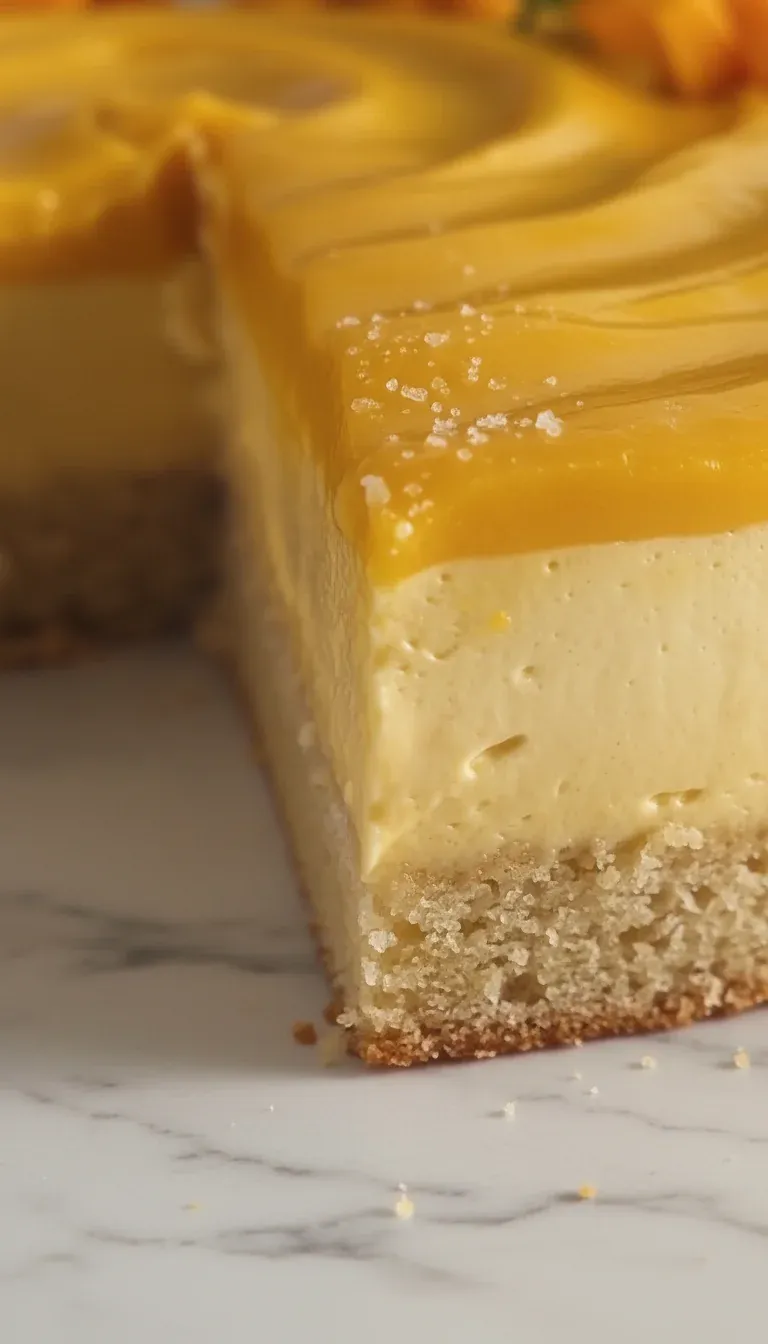
Table of contents
Honestly, when I first sliced into this mango mousse cake, the scent of ripe mango drifted like a warm summer afternoon. I remember the quiet hum of the kitchen, the way the mousse melted on the fork, and the soft sigh of the crumb underneath. It’s a cake that asks for nothing more than a quiet moment and a simple smile.
The essence of the dish
What makes this cake special is the contrast between a feather‑light mousse and a subtly sweet crumb, each bite delivering a hint of tropical sun.
A fun fact or historical angle
Mangoes were once called the "king of fruits" in India, and their export helped spread the fruit across continents.
Flavor or sensory focus
You’ll notice the bright citrus lift from lemon, the silky mouthfeel of whipped cream, and the lingering perfume of ripe mango.
You Must Know
- Work quickly once the gelatin is added.
- Do not over‑mix the mousse; keep it airy.
- Serve chilled for the best texture.
I remember a time when I let the mousse sit too long and it became a bit too firm. Even so, a quick stir and a fresh garnish revived it. So, keep an eye on the chill time, and enjoy the gentle balance of flavors each time you serve.
The story behind it
Mangoes have traveled from South Asia to the Caribbean, carried by traders and sailors for centuries. Their golden flesh became a symbol of hospitality in many cultures. Mango salad shows how versatile this fruit can be, and in this mousse cake we capture that history in a light, airy dessert that feels both modern and rooted in tradition.
Why You'll Love It
- Light and airy texture that never feels heavy
- Simple ingredients you probably already have
- Beautiful golden hue that brightens any table
- No baking required, just a gentle chill
Tips for success
- Keep the mixing bowl cold; it helps the cream hold air.
- Do not over‑whip the cream; it can turn buttery.
- Add gelatin while the mousse is still fluid for even setting.
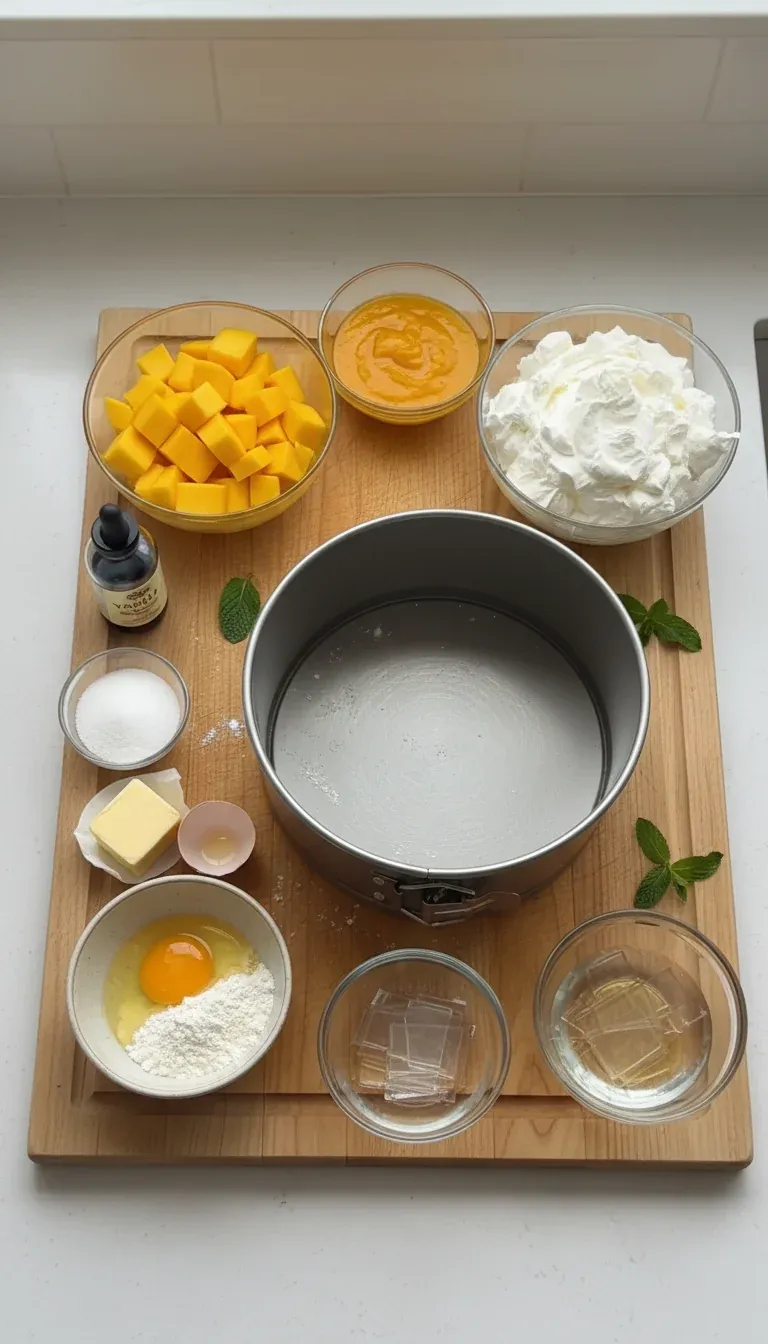
Professional secrets
- Bloom gelatin in cold water before heating; it dissolves smoothly.
- Use a chilled metal bowl for whipping cream for extra volume.
- Gently fold ingredients to preserve the airy texture.
Common mistakes to avoid
- Over‑whipping the cream, which makes the mousse stiff.
- Adding gelatin while the mousse is already set, leading to lumps.
- Using underripe mangoes, resulting in a bland flavor.
Substitutions
- Heavy cream: Coconut cream. Provides a subtle coconut flavor; ensure it’s chilled and whipped.
- Gelatin: Agar‑agar. Use ½ tsp agar‑agar dissolved in 2 tbsp hot water; set times may differ.
Variations
- Spicy Version: Add a pinch of cayenne and a swirl of never fail cake chili syrup for a gentle heat.
- Mediterranean Style: Fold in crumbled feta and chopped pistachios for a savory‑sweet contrast.
Storage
Cover tightly with plastic wrap and keep refrigerated; consume within three days for optimal texture.
Make ahead
You can blend the mango puree and whisk the cream a day ahead; store them separately and combine just before chilling the cake.
Leftovers
Refrigerate leftover slices in an airtight container; enjoy within two days for best texture.
Serving ideas
- Serve each slice on a simple white plate, garnish with fresh mango ribbons and a mint leaf.
- Pair with a light fruit sorbet for a refreshing two‑course dessert.
- Offer alongside a glass of chilled sparkling water with a slice of lime.
Allergy information
Contains dairy (cream) and gelatin.
Mango Mousse Cake
A breezy mango mousse cake that feels like a soft, sun‑kissed cloud on your plate.
- Prep time
- 20 min
- Total time
- 20 min
- Difficulty
- Easy
- Cuisine
- International
- Course
- Dessert
Ingredients
Mousse
Base
Instructions
- 1
Blend the mango flesh until silky; add lemon juice, sugar, and vanilla, then set aside.
- 2
Whisk the chilled cream to soft peaks; gently fold the mango puree into the whipped cream.
- 3
Stir the dissolved gelatin into the mango‑cream mixture, ensuring it’s fully incorporated.
- 4
Press the butter‑mixed crumbs into the bottom of a 9‑inch springform pan; chill for 10 minutes.
- 5
Pour the mousse over the chilled crust, smooth the top, and refrigerate for at least 1½ hours.
- 6
Before serving, garnish with fresh mango slices, a drizzle of moist fruit cake topping if desired, and a sprig of mint.
Nutrition per serving
- 280 kcal
- Calories
- 4 g
- Protein
- 34 g
- Carbs
- 12 g
- Fat
Tips & notes
- If the mousse looks slightly runny after folding, give it a few minutes in the fridge to firm up. - A quick taste of the mango puree will tell you whether you need extra sugar. - For a festive twist, add a pinch of ground cardamom to the mango puree.
Frequently asked questions
Can I use frozen mangoes?
Yes, thaw them completely and blend well; the texture will still be smooth.
Do I need a springform pan?
A simple round cake pan works fine; just line it with parchment.
How long can I keep the cake?
Store it covered in the fridge for up to 3 days; the mousse stays fresh.
Can I make it dairy‑free?
Swap the heavy cream for coconut cream and use agar‑agar instead of gelatin.
What topping works best?
Fresh mango slices, a drizzle of passion‑fruit coulis, or a sprinkle of toasted coconut.
Is the cake gluten‑free?
Use a gluten‑free crumb base such as almond flour or oat flour.