Pesto Pasta Salad
Fresh pesto pasta tossed with crisp vegetables for a light, satisfying dinner.
- Sofia Bennett
- Easy Dinner Recipes
- March 17, 2026
- 2 min read
- Updated November 20, 2026
- Total time
- 25 min
- Servings
- 4 Servings
- Difficulty:
- Easy
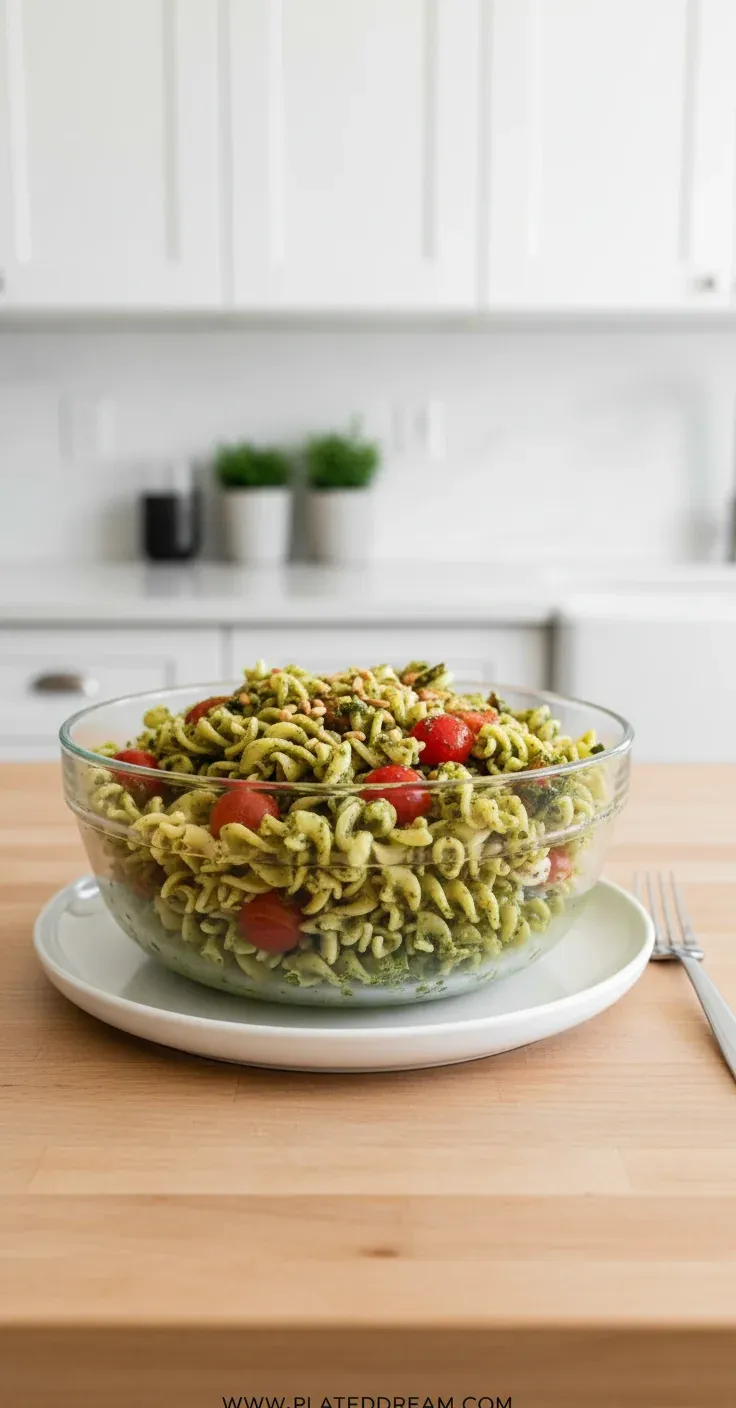
Table of contents
Honestly, I remember the first time I tossed cold spaghetti with homemade pesto on a lazy Sunday. The scent of basil and pine nuts filled the kitchen, and I thought, "Wow, this could be a staple." So, here’s a gently seasoned pesto pasta salad that whispers comfort without shouting.
The essence of the dish
A garden of basil and pine nuts meets tender pasta, creating a bright, herb‑forward salad that feels both fresh and comforting.
A fun fact or historical angle
Did you know pesto was originally called "pesto alla genovese" and was a peasant sauce, made with a mortar to crush ingredients by hand?
Flavor or sensory focus
Expect the cool bite of basil, the subtle crunch of toasted nuts, and the lingering warmth of olive oil on the palate.
You Must Know
- Use fresh basil for true aroma
- Don’t over‑blend; keep a bit of texture
- Season after chilling for balanced flavor
Ugh, I sometimes forget to season early enough, and the salad ends up bland. After a quick taste, I add a pinch of sea salt and a drizzle of lemon. It’s those small adjustments that keep the salad lively, especially when it sits for a few hours.
The story behind it
Pesto, with its roots in the Ligurian coast of Italy, began as a humble sauce of crushed basil, pine nuts, garlic, cheese, and olive oil, traditionally prepared with a mortar and pestle. Over centuries it traveled across oceans, finding homes in kitchens worldwide. This salad marries that classic green brilliance with the heartiness of pasta, creating a dish that feels both timeless and newly discovered.
Why You'll Love It
- Fresh basil gives a bright, aromatic lift
- No‑cook assembly saves time
- Versatile for picnics or weeknight meals
- Keeps well chilled, flavors deepen
Tips for success
- Don’t over‑process the pesto; keep tiny bits of basil for texture
- Season after chilling for balanced saltiness
- Reserve pasta water for adjusting sauce consistency
- Toast pine nuts lightly to avoid bitterness
Professional secrets
- Use fresh, high‑quality olive oil for a richer mouthfeel
- Add a pinch of flaky sea salt at the end to enhance herbal notes
- Chill the bowl before tossing to keep the salad crisp
Common mistakes to avoid
- Over‑blending pesto, losing texture
- Skipping the toast on pine nuts, resulting in bitterness
- Adding too much salt before the salad chills
Substitutions
- Pine nuts: Walnuts or almonds. Toast lightly; they bring a richer flavor.
- Parmesan cheese: Nutritional yeast. Keeps it vegan while adding a cheesy note.
Variations
- Spicy Version: Add a pinch of red pepper flakes to the pesto for a gentle heat.
- Mediterranean Style: Stir in crumbled feta, halved olives, and sun‑dried tomatoes for a Mediterranean twist.
Storage
Keep in a sealed container in the fridge; good for up to three days.
Make ahead
You can blend the pesto a day ahead and store it in the fridge; simply toss with cooked pasta when ready.
Leftovers
Enjoy cold as a snack or toss into a warm soup for added texture.
Serving ideas
- Serve alongside grilled chicken for a protein boost
- Pair with a light cucumber‑tomato salad for freshness
- Garnish with extra pine nuts and a drizzle of olive oil
Allergy information
Contains nuts, dairy, and wheat.
Pesto Pasta Salad
Fresh pesto pasta tossed with crisp vegetables for a light, satisfying dinner.
- Prep time
- 15 min
- Cook time
- 10 min
- Total time
- 25 min
- Difficulty
- Easy
- Cuisine
- Italian
Ingredients
Main Ingredients
Instructions
- 1
Bring a large pot of salted water to a boil, add the pasta, and cook until al dente. Drain, rinse under cool water, and set aside.
- 2
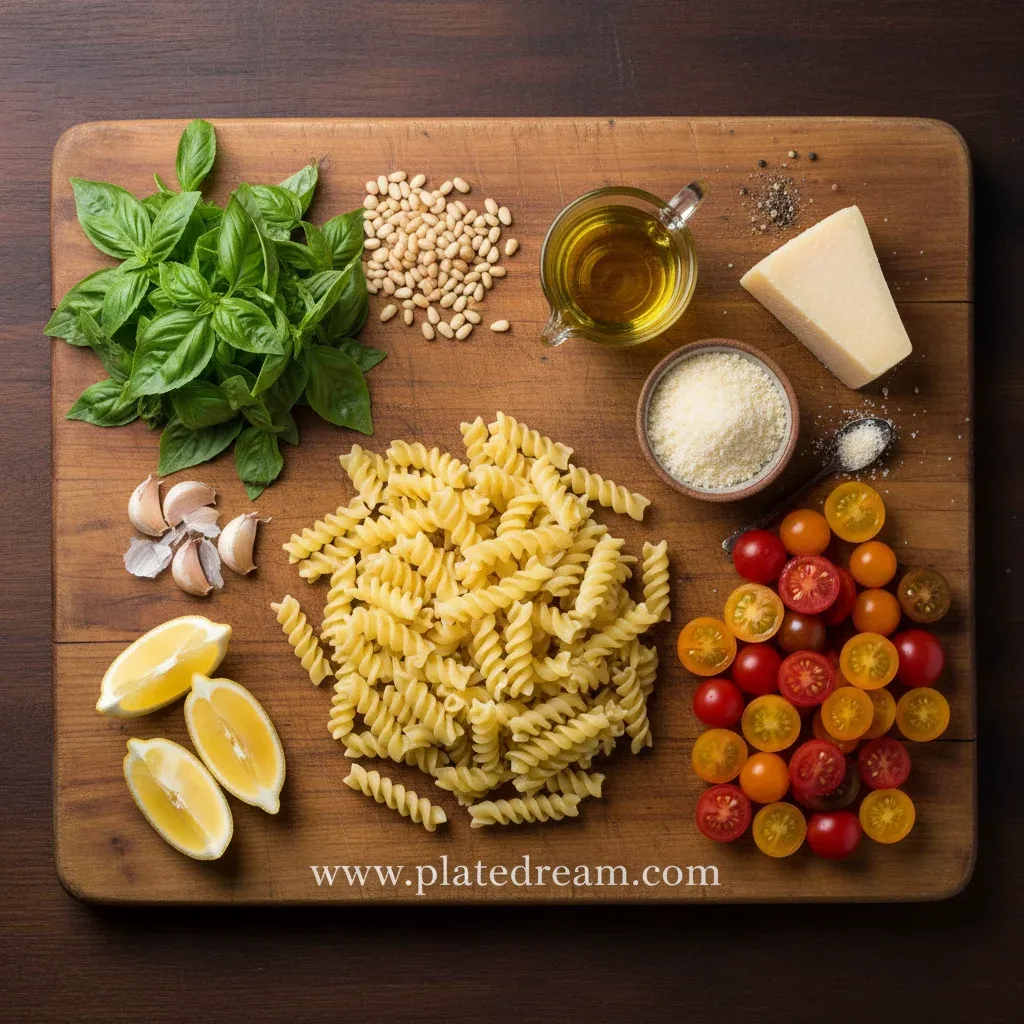
While the pasta cooks, combine basil, toasted pine nuts, garlic, Parmesan, lemon juice, and a pinch of salt in a food processor; pulse until coarse.
- 3
With the processor running, slowly drizzle in olive oil until the mixture forms a smooth, glossy pesto. Taste and add pepper if needed.
- 4
In a large bowl, toss the cooled pasta with the pesto, ensuring every piece is lightly coated.
- 5
Fold in cherry tomatoes and sliced olives, then let the salad chill for at least 15 minutes.
- 6
Before serving, give the salad a gentle toss, drizzle a little extra olive oil, and sprinkle with additional Parmesan if you like.
Nutrition per serving
- 420 kcal
- Calories
- 12 g
- Protein
- 38 g
- Carbs
- 22 g
- Fat
Tips & notes
- If the pesto seems thick, add a splash of the reserved pasta water. - For extra brightness, grate a bit of lemon zest over the finished salad. - The salad tastes even better the next day as the flavors meld.
Frequently asked questions
Can I use a different pasta shape?
Absolutely, any short or twisted pasta works—fusilli, farfalle, or even orzo.
Is it okay to add protein?
Yes, grilled chicken or canned tuna blend nicely without overpowering the pesto.
How long will it keep?
Stored in an airtight container, it stays fresh for up to three days in the refrigerator.
Can I substitute pine nuts?
Walnuts or almonds make a hearty alternative, just toast them lightly.
Is this recipe vegan?
Replace Parmesan with nutritional yeast and you have a vegan-friendly version.
What’s the best way to re‑heat?
Serve cold or at room temperature; heating can wilt the fresh herbs.