French Macarons
Beginner‑friendly French macarons with airy shells and creamy filling.
- Isabella Martin
- Desserts & Sweet Treats
- March 11, 2026
- 2 min read
- Updated November 20, 2026
- Total time
- 45 min
- Servings
- 24 Servings
- Difficulty:
- Hard
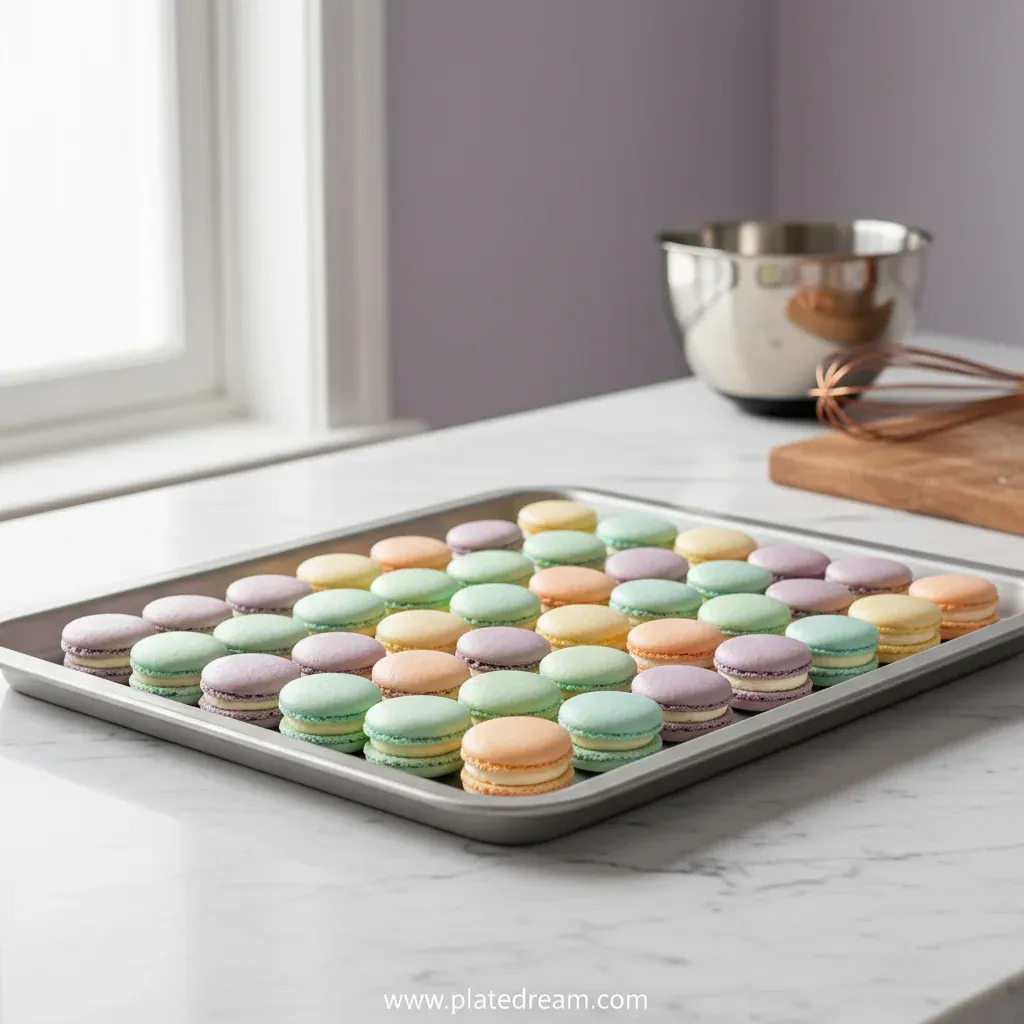
Table of contents
Honestly, making macarons can feel like a gentle ritual. Yeah, the pastel shells whisper of buttery sweetness, and the soft buttercream sings of vanilla. I remember the first batch I tried, the kitchen filled with a faint almond scent, and I thought, “wow, this is doable.”
The essence of the dish
It’s the marriage of a crisp, slightly chewy shell with a luscious, buttery filling that makes macarons unforgettable.
A fun fact or historical angle
In the 1930s, French patissier Pierre Desfontaines popularized the two‑color sandwich style we know today.
Flavor or sensory focus
Expect the faint scent of toasted almond, a buttery melt on the palate, and a whisper of vanilla that lingers.
You Must Know
- Consistent oven temperature is key
- Don’t over‑mix the batter
- Rest the shells before baking
Well, those points are little habits that turn a simple batch into something elegant. Take your time, and let the process be a gentle pause in your day. The result? A tray of pastel gems that feel like a quiet celebration.
The story behind it
The French macaron, a petite meringue‑based confection, traces its roots to the Italian almond cakes that arrived in France during the Renaissance. Over centuries, the treat evolved into the elegant sandwich cookie beloved worldwide. Its delicate texture and refined flavor have made it a staple in patisseries, symbolizing both patience and precision.
Why You'll Love It
- Simple ingredients, no fancy equipment
- Beautiful pastel colors for any occasion
- Satisfying crack of the shell and creamy core
- Great for gifting or serving with tea
Tips for success
- Use a kitchen scale, precise amounts matter ...
- Let shells rest, skin formation prevents cracks ...
- Bake at low, steady heat for even rise ...
Professional secrets
- Room temperature egg whites, ensures stable meringue
- Gentle folding, retains air for light texture
- A cool oven, prevents over‑browning
Common mistakes to avoid
- Over‑mixing the batter, leading to flat shells.
- Insufficient resting time, causing cracks.
- Baking at too high a temperature, resulting in brown edges.
Substitutions
- Almond flour: Hazelnut flour. Will give a deeper, nutty flavor; sift well.
- Butter: Margarine. Use a high‑quality margarine for similar texture.
Variations
- Spicy Version: Add a pinch of cayenne and a dash of cinnamon to the buttercream for a gentle heat.
- Mediterranean Style: Incorporate finely chopped pistachios and a hint of orange zest into the filling.
Storage
Store in an airtight container in the refrigerator for up to five days.
Make ahead
You can pipe and bake the shells up to two days ahead; store them airtight and add the filling when ready.
Leftovers
Keep leftovers refrigerated; gently warm them in the oven for a few minutes before serving.
Serving ideas
- Arrange macarons on a pastel cake stand.
- Serve with a side of fresh fruit compote.
- Pair with a cup of aromatic tea.
- Garnish each macaron with a tiny edible flower.
Allergy information
Contains nuts (almond) and dairy (butter).
- Prep time
- 30 min
- Cook time
- 15 min
- Total time
- 45 min
- Difficulty
- Hard
- Cuisine
- French
- Course
- Dessert
Ingredients
Shells
Buttercream Filling
Instructions
- 1
Preheat the oven to 300°F (150°C) and line two baking sheets with parchment. desserts
- 2
Sift almond flour and powdered sugar together into a bowl; set aside.
- 3
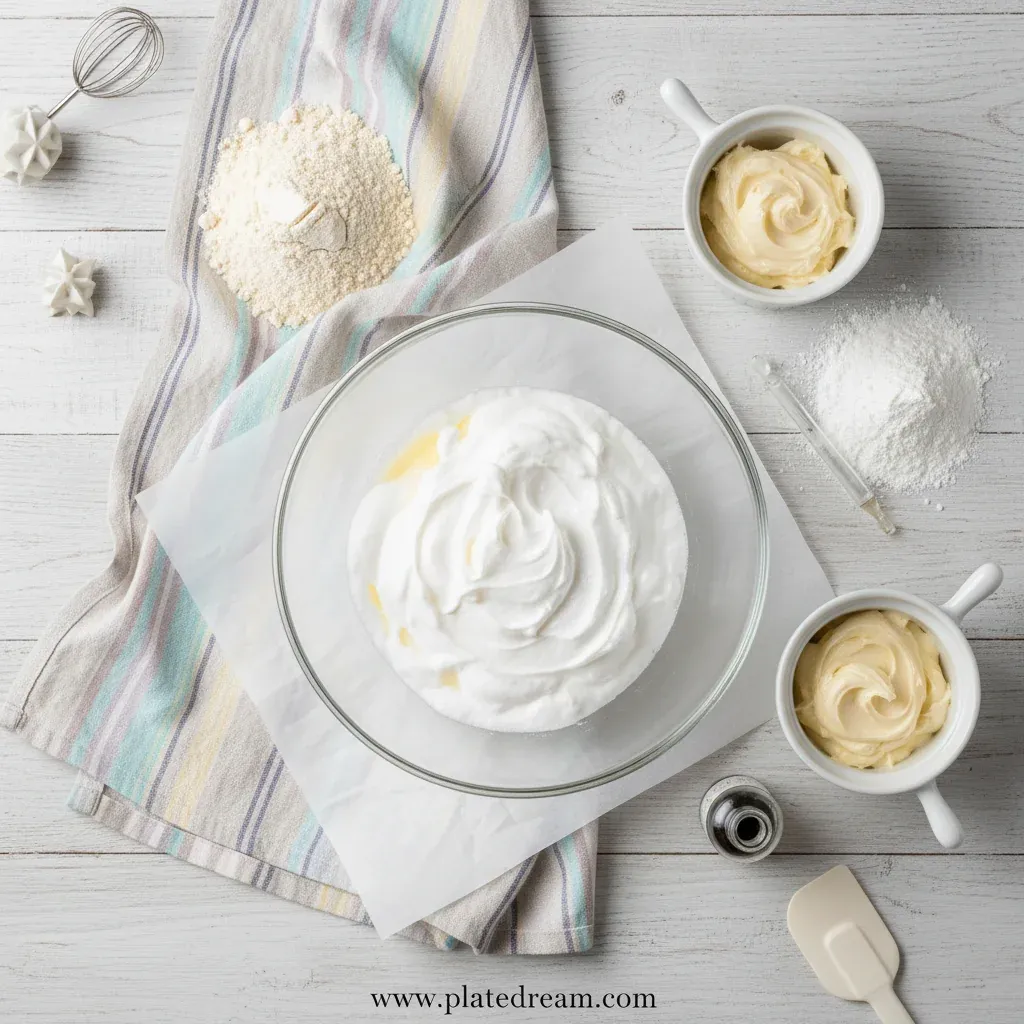
In a clean bowl, whisk egg whites with cream of tartar until foamy; gradually add granulated sugar and beat to stiff, glossy peaks.
- 4
Add a few drops of gel coloring if using, then gently fold the sifted dry ingredients into the meringue until the batter flows like thick lava.
- 5
Transfer batter to a piping bag fitted with a round tip; pipe 1‑inch circles onto parchment, spacing 1 inch apart.
- 6
Let the shells rest at room temperature for 30‑45 minutes until a skin forms; you can gently touch the surface—no sticky residue should remain.
- 7
Bake for 12‑15 minutes, then turn off the oven and let the shells sit for 5 minutes before removing them.
- 8
While shells cool, beat butter until creamy, then add powdered sugar, vanilla, and lemon zest; mix until light and fluffy.
- 9
Pipe a small dollop of buttercream onto the flat side of one shell and sandwich with another shell; repeat for all shells.
- 10
Refrigerate the assembled macarons for at least 12 hours to allow flavors to meld. chocolate croissants
Nutrition per serving
- 120 kcal
- Calories
- 2 g
- Protein
- 16 g
- Carbs
- 5 g
- Fat
Tips & notes
- If the shells develop cracks, the batter was likely over‑mixed. - Allow enough resting time; rushing this step leads to uneven shells. - For brighter colors, use gel food coloring rather than liquid.
Frequently asked questions
Can I use food coloring?
Yes, add a few drops of gel or powder color to the folded batter for subtle hues.
Why do my shells crack unevenly?
It often means the batter was over‑mixed or the shells weren’t rested long enough.
Do I need a special oven?
A regular oven works fine; just keep the temperature steady and use the middle rack.
Can I freeze macarons?
Absolutely—freeze them in an airtight container for up to a month, then thaw at room temperature.
How long do they stay fresh?
Stored in the fridge, they’re best within 5 days, though the texture stays lovely.
What filling variations work well?
Try raspberry jam, pistachio buttercream, or a light chocolate ganache for different flavors.